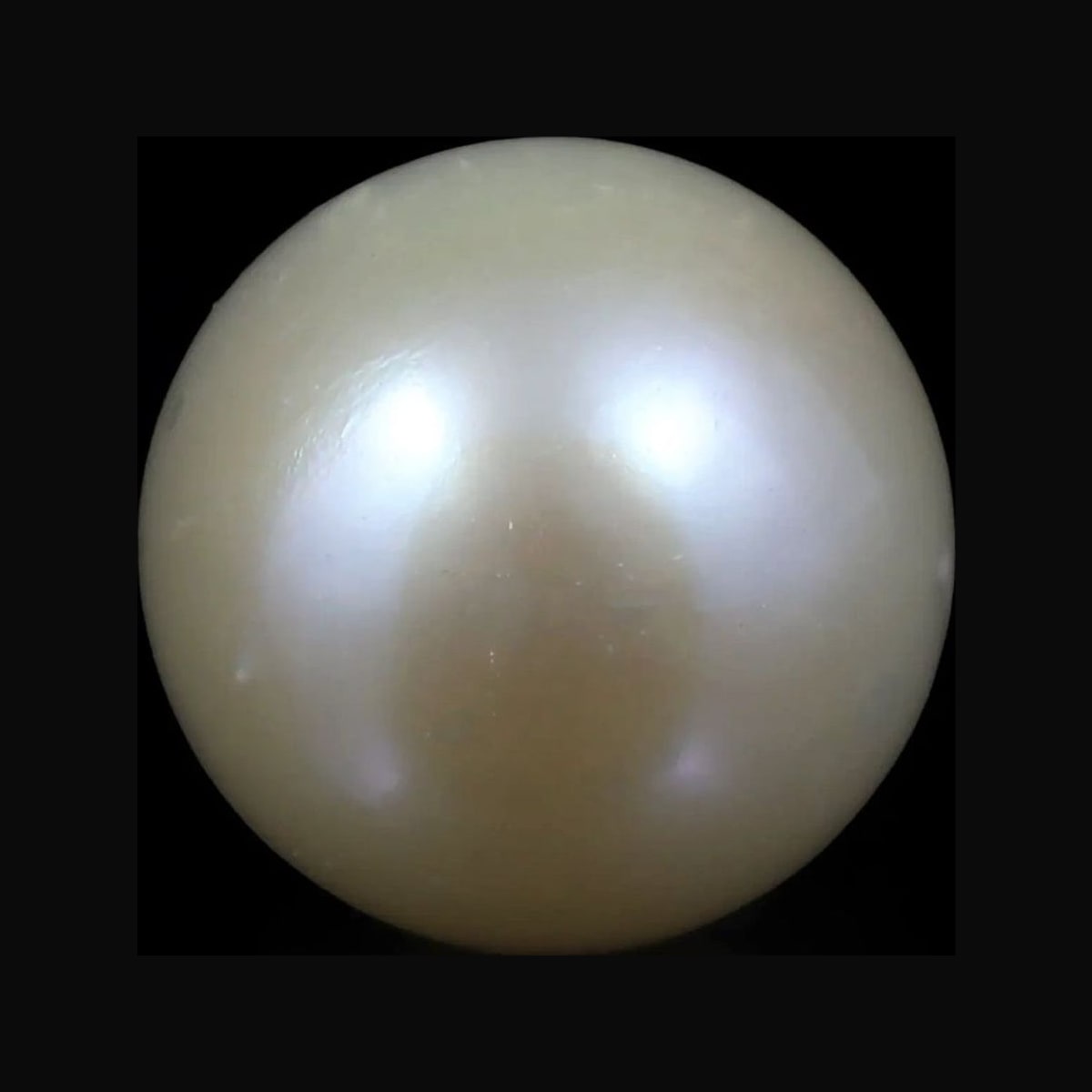
South Sea Moti (Pearl)साउथ सी मोती (पर्ल)Moon • Pearl
Price on requestकीमत के लिए पूछें
Moti (pearl) is the ratna traditionally associated with the Moon (Chandra). As per tradition it is set in silver and worn on the little finger, starting on a Monday, though some families use the ring finger. Whether it suits you is a question for your birth chart, not your Rashi alone. One honest fact first: most pearls sold today are cultured, not natural, and only a laboratory can tell the two apart with confidence.ज्योतिष शास्त्र में मोती को चंद्रमा का रत्न माना जाता है। परंपरा में इसे चाँदी में जड़वाकर, सोमवार से, छोटी उँगली (कनिष्ठा) में पहना जाता है; कुछ परिवार अनामिका में पहनते हैं। यह आपके लिए उपयुक्त है या नहीं, यह पूरी कुंडली से तय होता है, केवल राशि से नहीं। और एक ईमानदार बात: आज बिकने वाले ज़्यादातर मोती कल्चर्ड हैं, प्राकृतिक नहीं, और दोनों का फ़र्क़ भरोसे से केवल प्रयोगशाला बता सकती है।
Moti is pearl, an organic gem. It grows inside a living mollusc, a saltwater oyster or a freshwater mussel, which coats an irritant with very thin layers of nacre: the same shiny material that lines the inside of the shell.
Built in layers rather than mined, a pearl is softer than mineral gems and needs no cutting; its beauty is the soft glow of the nacre itself.
The market has three kinds: natural pearls, formed with no human help; cultured pearls, started by a farmer who places a bead or a piece of tissue inside the mollusc; and imitations of glass, plastic or coated shell beads. Only the first two are real pearls.
In Vedic astrology the Moon (Chandra) is regarded as the karaka (significator) of the mind. Tradition links it with emotions, calm, the mother and the home, and your Rashi is simply the sign the Moon occupied when you were born.
Moti is the ratna tradition assigns to the Moon, which is why it is also called Chandra ratna. Tradition associates it with the same things the Moon stands for: the mind, emotions, the mother and the home. These are matters of faith; no result is promised, and a pearl is no substitute for a doctor or a counsellor.
Monday (Somvar), the Moon's day, is the customary day to begin wearing it.
Tradition does not prescribe Moti to everyone of a certain birthday or sign. Astrologers decide from the full birth chart, and two people with the same Rashi can receive different advice.
A common starting point is the Moon sign. Kark (Cancer) is the only sign ruled by the Moon, so Kark natives often ask about Moti first; find your Moon sign with the Rashi calculator.
Our Rashi ratna guide explains how each sign's ruling planet maps to a ratna, and why a chart reading goes further. Astrologers usually weigh these points:
For a personal answer, speak to one of our astrologers.
The table gives the practice most common in North India. Practices differ between families and regions; if your family pandit or astrologer advises otherwise, follow them.
Purification, mantra and the step-by-step method are covered in our ratna dharan vidhi guide.
| Point | Tradition |
|---|---|
| Planet | Moon (Chandra) |
| Finger | Little finger (kanishtha); some traditions use the ring finger |
| Metal | Silver |
| Day | Monday (Somvar) |
| Preferred look | Usually white or cream, round, with good lustre |
| Weight | Decided by your astrologer; listings give carat and ratti (1 ratti is about 0.91 carat): see ratti to carat |
| Lighter option (uparatna) | Moonstone, also linked with the Moon in tradition; not equal to Moti |
Before ordering a ring, check your size with our ring size guide.
Natural pearls form by chance, with no human help, and are rare today. The Indian trade name Basra moti comes from the natural pearls of the Persian Gulf, once traded through the port of Basra. The name is now used loosely for any good-looking pearl, so only a laboratory report settles it.
Cultured pearls are real pearls grown on farms: not fake, but not natural either, and a fair seller says so plainly. A natural pearl costs many times more than a similar-looking cultured one.
| Type | Grown in | Typical look | What to know |
|---|---|---|---|
| Natural (Basra and others) | Wild oysters; historically the Persian Gulf and the Gulf of Mannar | Often small and not perfectly round | Rare and costly; ask for a lab report |
| Freshwater cultured | Mussels in lakes and rivers, mostly in China | Many shapes and colours; often nacre almost throughout | The most common and most affordable |
| Akoya cultured | Saltwater oysters, mainly Japan and China | Small to medium, round, sharp lustre | Commonly bleached; usually grown on a bead |
| South Sea cultured | Large oysters in Australia, Indonesia and the Philippines | Large; white, silver or golden | Among the costliest cultured pearls |
| Tahitian cultured | Black-lip oysters, French Polynesia | Dark grey, green or peacock tones | Dark; tradition usually prefers a white Moti |
Almost every pearl is cleaned and polished after harvest. Some are also treated to change their colour or lustre, and that treatment should always be stated on the listing.
Our guide to natural vs treated gemstones explains why disclosure matters.
Experts judge a pearl on several points together, never on one alone:
A few simple checks catch many imitations. None of them can tell a natural pearl from a cultured one, and some popular tests can damage a genuine pearl.
For a valuable pearl, rely on a laboratory report, not on home tests.
Separating natural from cultured needs a look inside the pearl. Gemmological laboratories use X-ray imaging: a natural pearl usually shows concentric growth layers, while a bead-cultured pearl shows a bead nucleus with nacre around it.
Read the report against the pearl itself: weight, size, shape and colour should all match. Our guide on how to read a gemstone certificate explains what to check.
Every listing on our site shows the weight in carat and ratti, origin, natural or treated status, and the laboratory name and report number where a certificate exists. Before buying any pearl, ask whether it is natural or cultured. See the Moti gemstone page for current availability. A pearl report usually states:
Pearl is soft, about 2.5 to 4.5 on the Mohs scale, against 9 for sapphire and ruby. It is made mostly of calcium carbonate, so acids, perfume and sweat slowly dull it.
Moonstone is a feldspar crystal with a soft blue-white sheen. Tradition also links it with the Moon, and some families choose it as a lighter, more affordable stone, but tradition does not treat it as equal to Moti.
If you are deciding between the two, ask an astrologer, and compare the ratna in our gemstone collection.
मोती एक जैविक रत्न है, खदान से निकला पत्थर नहीं। यह समुद्र की सीप या मीठे पानी की सीपी के अंदर बनता है। कोई कण भीतर चला जाए तो जीव उस पर नैकर (nacre) की बेहद पतली परतें चढ़ाता जाता है, वही चमकदार पदार्थ जो सीप के भीतर की सतह पर दिखता है।
परतों से बनने के कारण मोती खनिज रत्नों से नरम होता है और इसे तराशना नहीं पड़ता; इसकी सुंदरता नैकर की कोमल आभा में ही है।
बाज़ार में तीन तरह के मोती मिलते हैं: प्राकृतिक, जो बिना इंसानी मदद के बने; कल्चर्ड, जिनमें किसान सीप के अंदर दाना (बीड) या ऊतक का टुकड़ा रखकर शुरुआत करता है; और नक़ली, जो काँच, प्लास्टिक या परत चढ़े सीप के दाने होते हैं। असली मोती केवल पहले दो हैं।
वैदिक ज्योतिष में चंद्रमा को मन का कारक माना जाता है। परंपरा इसे भावनाओं, मन की शांति, माता और घर-परिवार से जोड़ती है। आपकी राशि भी वही होती है जिसमें जन्म के समय चंद्रमा था।
मोती को चंद्रमा का रत्न माना जाता है, इसीलिए इसे चंद्र रत्न भी कहते हैं। परंपरा इसे उन्हीं बातों से जोड़ती है जिनका प्रतीक चंद्रमा है: मन, भावनाएँ, माता और घर-परिवार। यह आस्था की बात है; किसी परिणाम का वादा नहीं है, और मोती डॉक्टर या काउंसलर की जगह नहीं ले सकता।
चंद्रमा के दिन, सोमवार को, इसे पहनना शुरू करने की परंपरा है।
परंपरा किसी ख़ास जन्मतिथि या राशि वाले हर व्यक्ति को मोती पहनने को नहीं कहती। ज्योतिषी पूरी जन्म कुंडली देखकर सलाह देते हैं, और एक ही राशि के दो लोगों को अलग-अलग सलाह मिल सकती है।
शुरुआत अक्सर चंद्र राशि से होती है। कर्क अकेली राशि है जिसका स्वामी चंद्रमा है, इसलिए कर्क राशि वाले मोती के बारे में सबसे पहले पूछते हैं। अपनी चंद्र राशि राशि कैलकुलेटर से जानें।
हर राशि के स्वामी ग्रह से कौन-सा रत्न जुड़ा है और कुंडली देखना उससे आगे क्यों जाता है, यह हमारे राशि रत्न गाइड में है। ज्योतिषी प्रायः ये बातें देखते हैं:
अपने लिए सीधा जवाब चाहिए तो हमारे ज्योतिषी से बात करें।
नीचे की तालिका उत्तर भारत की सबसे प्रचलित परंपरा बताती है। परिवारों और क्षेत्रों में प्रथाएँ अलग हो सकती हैं; कुल-पंडित या ज्योतिषी कुछ और कहें तो उन्हीं की बात मानें।
शुद्धि, मंत्र और पहनने की पूरी विधि हमारे रत्न धारण विधि गाइड में दी गई है।
| बिंदु | परंपरा |
|---|---|
| ग्रह | चंद्रमा (चंद्र) |
| उँगली | कनिष्ठा (छोटी उँगली); कुछ परंपराओं में अनामिका |
| धातु | चाँदी |
| दिन | सोमवार |
| पसंदीदा रूप | प्रायः सफ़ेद या क्रीम, गोल, अच्छी चमक वाला |
| वज़न | ज्योतिषी तय करते हैं; लिस्टिंग में कैरेट और रत्ती दोनों (1 रत्ती लगभग 0.91 कैरेट): देखें रत्ती से कैरेट |
| हल्का विकल्प (उपरत्न) | मूनस्टोन, परंपरा में यह भी चंद्रमा से जुड़ा; पर मोती के बराबर नहीं |
अंगूठी बनवाने से पहले रिंग साइज़ गाइड से अपना नाप जाँच लें।
प्राकृतिक मोती संयोग से, बिना इंसानी मदद के बनते हैं और आज बहुत दुर्लभ हैं। बसरा मोती नाम फ़ारस की खाड़ी के उन प्राकृतिक मोतियों से आया है जिनका व्यापार कभी बसरा बंदरगाह से होता था। आजकल यह नाम किसी भी सुंदर मोती के लिए बोल दिया जाता है, इसलिए फ़ैसला लैब रिपोर्ट से ही होता है।
कल्चर्ड मोती फ़ार्म में उगाए गए असली मोती हैं: नक़ली नहीं, पर प्राकृतिक भी नहीं, और ईमानदार विक्रेता यह साफ़ बताता है। मिलते-जुलते कल्चर्ड मोती से प्राकृतिक मोती कई गुना महँगा होता है।
| प्रकार | कहाँ बनता है | आम रूप | ध्यान रखें |
|---|---|---|---|
| प्राकृतिक (बसरा आदि) | जंगली सीप; ऐतिहासिक रूप से फ़ारस की खाड़ी और मन्नार की खाड़ी | प्रायः छोटा, अक्सर पूरी तरह गोल नहीं | दुर्लभ और महँगा; लैब रिपोर्ट माँगें |
| मीठे पानी का कल्चर्ड | झीलों और नदियों की सीपी, ज़्यादातर चीन में | कई आकार और रंग; अक्सर लगभग पूरा नैकर | सबसे आम और सबसे किफ़ायती |
| अकोया कल्चर्ड | खारे पानी की सीप, मुख्यतः जापान और चीन | छोटा से मध्यम, गोल, तीखी चमक | अक्सर ब्लीच किया जाता है; प्रायः अंदर दाना (बीड) |
| साउथ सी कल्चर्ड | बड़ी सीप; ऑस्ट्रेलिया, इंडोनेशिया और फ़िलीपींस | बड़ा; सफ़ेद, चाँदी जैसा या सुनहरा | कल्चर्ड मोतियों में सबसे महँगे में से |
| ताहिती कल्चर्ड | काले होंठ वाली सीप, फ़्रेंच पोलिनेशिया | गहरा स्लेटी, हरा या मोरपंखी रंग | गहरा रंग; परंपरा प्रायः सफ़ेद मोती पसंद करती है |
लगभग हर मोती को निकालने के बाद साफ़ और पॉलिश किया जाता है। कुछ का रंग या चमक बदलने के लिए ट्रीटमेंट भी होता है, जो लिस्टिंग में लिखा होना चाहिए।
ट्रीटमेंट बताना क्यों ज़रूरी है, यह हमारे प्राकृतिक बनाम ट्रीटेड रत्न गाइड में समझाया गया है।
जानकार मोती को किसी एक बात से नहीं, इन सब बातों को साथ देखकर परखते हैं:
कुछ आसान जाँचों से कई नक़ली मोती पकड़े जा सकते हैं। पर इनमें से कोई भी जाँच प्राकृतिक और कल्चर्ड मोती का फ़र्क़ नहीं बता सकती, और कुछ प्रचलित तरीक़े असली मोती को नुक़सान पहुँचा सकते हैं।
क़ीमती मोती के लिए घरेलू जाँच नहीं, लैब रिपोर्ट पर भरोसा करें।
प्राकृतिक और कल्चर्ड का फ़र्क़ जानने के लिए मोती के भीतर झाँकना पड़ता है। रत्न-प्रयोगशालाएँ एक्स-रे से भीतरी बनावट देखती हैं: प्राकृतिक मोती में प्रायः प्याज़ जैसी गोल परतें दिखती हैं, जबकि बीड वाले कल्चर्ड मोती में बीच में दाना और उसके चारों ओर नैकर।
रिपोर्ट को मोती से मिलाकर पढ़ें: वज़न, साइज़, आकार और रंग सब मेल खाने चाहिए। क्या-क्या जाँचें, यह हमारे रत्न सर्टिफ़िकेट गाइड में बताया गया है।
हमारी साइट पर हर लिस्टिंग में कैरेट और रत्ती में वज़न, उद्गम, प्राकृतिक या ट्रीटेड स्थिति, और जहाँ सर्टिफ़िकेट हो वहाँ लैब का नाम और रिपोर्ट नंबर दिया जाता है। कोई भी मोती खरीदने से पहले पूछें कि वह प्राकृतिक है या कल्चर्ड। अभी क्या उपलब्ध है, यह मोती रत्न पेज पर देखें। मोती की रिपोर्ट में प्रायः ये बातें होती हैं:
मोती नरम होता है: मोह्स पैमाने पर लगभग 2.5 से 4.5, जबकि नीलम और माणिक 9 पर आते हैं। यह मुख्य रूप से कैल्शियम कार्बोनेट से बना है, इसलिए एसिड, इत्र और पसीना धीरे-धीरे इसकी चमक कम कर देते हैं।
मूनस्टोन फ़ेल्डस्पार परिवार का क्रिस्टल है, जिसमें हल्की नीली-सफ़ेद आभा तैरती दिखती है। परंपरा इसे भी चंद्रमा से जोड़ती है और कुछ परिवार इसे किफ़ायती विकल्प के रूप में चुनते हैं, पर इसे मोती के बराबर नहीं माना जाता।
दोनों में से चुनना हो तो ज्योतिषी की सलाह लें, और रत्नों की तुलना हमारे रत्न संग्रह में करें।
There is no rule by birthday or name. As per tradition, astrologers decide from the birth chart: the Moon's sign, house, strength and running Dasha. Kark (Cancer) is ruled by the Moon, so Kark natives often ask first, though advice still differs. A detailed Kundli report or an astrologer can answer for you.
Tradition commonly suggests the little finger, in a silver ring, starting on a Monday. Some traditions use the ring finger instead; both are followed in Indian families, so go with your astrologer or family pandit.
Basra moti is an old trade name for natural pearls from the Persian Gulf, once traded through the port of Basra. True Basra pearls are rare and costly. The name is now used loosely, so before paying a natural-pearl price, ask for a laboratory report that says natural.
Yes. A cultured pearl grows inside a living oyster or mussel and is made of real nacre; a person only starts the process. It is not a natural pearl and should be sold as cultured. Astrologers differ on whether a cultured pearl serves as Moti, so ask yours.
Pearls can yellow with age and with regular contact with sweat, perfume and cosmetics. Some are cream or golden by nature, and bleached pearls can change colour over the years. Gentle care slows the change, but home cleaning does not restore the first colour.
There is no single answer. Thumb rules based on body weight circulate, but astrologers decide case by case from the chart. Our listings give the weight in both carat and ratti, so you can match the figure your astrologer suggests.
Moti is a pearl, an organic gem from a mollusc, and the Moon's ratna in tradition. Moonstone is a feldspar crystal with a bluish sheen that tradition also links with the Moon, but only as a lighter option, not an equal.
जन्मतिथि या नाम से इसका कोई नियम नहीं है। परंपरा के अनुसार ज्योतिषी कुंडली में चंद्रमा की राशि, भाव, बल और चल रही दशा देखकर बताते हैं। कर्क राशि का स्वामी चंद्रमा है, इसलिए कर्क राशि वाले अक्सर पहले पूछते हैं, फिर भी सलाह अलग हो सकती है। अपने लिए कुंडली रिपोर्ट लें या ज्योतिषी से पूछें।
परंपरा में प्रायः छोटी उँगली (कनिष्ठा) में, चाँदी की अंगूठी में, सोमवार से पहनने की बात कही जाती है। कुछ परंपराओं में अनामिका में पहना जाता है; दोनों प्रथाएँ चलती हैं, इसलिए अपने ज्योतिषी या कुल-पंडित की बात मानें।
बसरा मोती फ़ारस की खाड़ी के प्राकृतिक मोतियों का पुराना व्यापारिक नाम है, जिनका कारोबार कभी बसरा बंदरगाह से होता था। असली बसरा मोती दुर्लभ और महँगे हैं। आज यह नाम ढीले ढंग से चलता है, इसलिए प्राकृतिक मोती की क़ीमत देने से पहले ऐसी लैब रिपोर्ट माँगें जिसमें प्राकृतिक (natural) लिखा हो।
हाँ। कल्चर्ड मोती जीवित सीप या सीपी के अंदर ही बनता है और असली नैकर का होता है; इंसान केवल प्रक्रिया शुरू करता है। पर यह प्राकृतिक मोती नहीं है और इसे कल्चर्ड बताकर ही बेचा जाना चाहिए। ज्योतिष के लिए कल्चर्ड मोती मान्य है या नहीं, इस पर ज्योतिषियों की राय अलग है; अपने ज्योतिषी से पूछें।
उम्र के साथ, और पसीने, इत्र या मेकअप के लगातार संपर्क से मोती पीला पड़ सकता है। कुछ मोती स्वभाव से ही क्रीम या सुनहरे होते हैं, और ब्लीच किए मोती का रंग बरसों में बदल सकता है। सावधानी से रखने पर बदलाव धीमा होता है, पर घर की सफ़ाई से पहले जैसा रंग नहीं लौटता।
इसका कोई एक जवाब नहीं है। शरीर के वज़न से रत्ती जोड़ने जैसे नियम सुनने में आते हैं, पर ज्योतिषी हर कुंडली देखकर अलग से तय करते हैं। हमारी लिस्टिंग में वज़न कैरेट और रत्ती दोनों में दिया जाता है, ताकि आप ज्योतिषी की बताई मात्रा से मिला सकें।
मोती सीप से बनने वाला जैविक रत्न है और परंपरा में चंद्रमा का रत्न है। मूनस्टोन नीली-सी आभा वाला फ़ेल्डस्पार क्रिस्टल है, जिसे परंपरा चंद्रमा से जोड़ती तो है, पर केवल हल्के विकल्प के रूप में, मोती के बराबर नहीं।
How we wrote this: from the jyotish tradition as commonly practised in North India, our astrologers' practice and standard gemmological references on pearl types, treatments and care. No statistics or quotes are invented. Updated 11 October 2026.
Gemstones and astrology are matters of faith and tradition. A pearl is not a substitute for medical care, counselling, or legal or financial advice.
हमने यह लेख कैसे लिखा: उत्तर भारत में प्रचलित ज्योतिष परंपरा, हमारे ज्योतिषियों के अनुभव, और मोती के प्रकार, ट्रीटमेंट व देखभाल पर मानक रत्न-विज्ञान संदर्भों के आधार पर। कोई आँकड़ा या उद्धरण गढ़ा नहीं गया है। अपडेट: 11 अक्टूबर 2026।
रत्न और ज्योतिष आस्था और परंपरा के विषय हैं। मोती डॉक्टर, काउंसलर, क़ानूनी या आर्थिक सलाह की जगह नहीं ले सकता।
Gemstones and spiritual products are sold on the basis of traditional belief and faith. No medical, financial or personal result is promised. Please consult an astrologer of your choice before wearing a gemstone.
रत्न और आध्यात्मिक उत्पाद पारंपरिक मान्यता और आस्था के आधार पर बेचे जाते हैं। किसी चिकित्सीय, आर्थिक या व्यक्तिगत परिणाम का वादा नहीं है। रत्न पहनने से पहले कृपया अपनी पसंद के ज्योतिषी से सलाह लें।